What About the Little Guys?

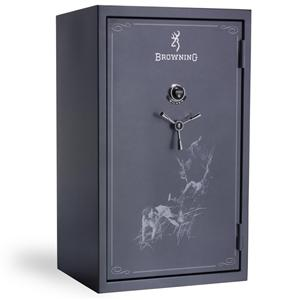
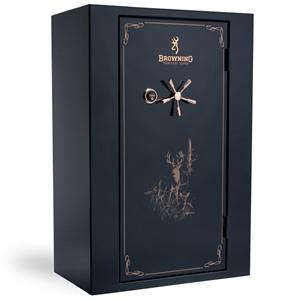
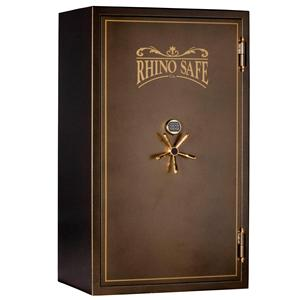
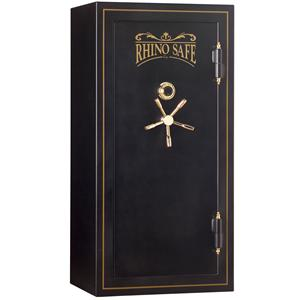
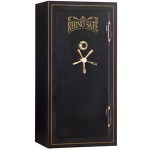
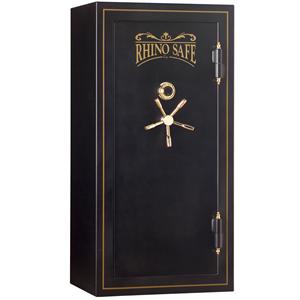
At GunSafes, we spend a lot of time selling, promoting, and talking about the big dogs—the 36-gun safes, the 30 minutes theft-rated safes, the virtually impenetrable deluxe safes with cedar-lined, mirrored interiors and special USB pass keys.

But what about the little guys?

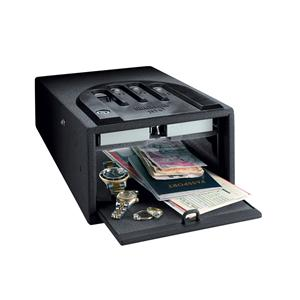
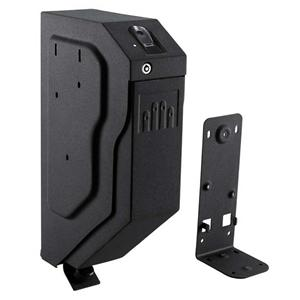
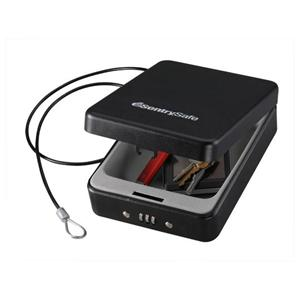
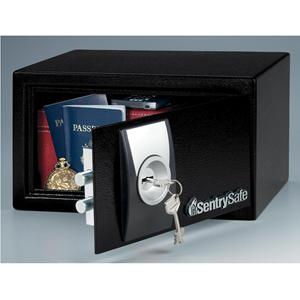
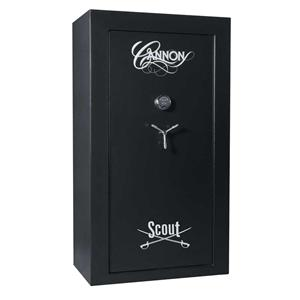
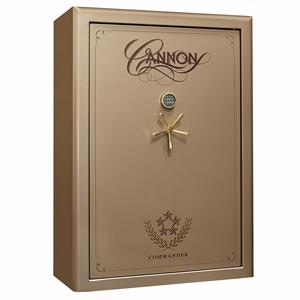
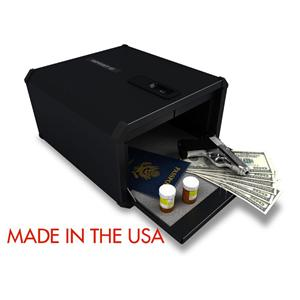
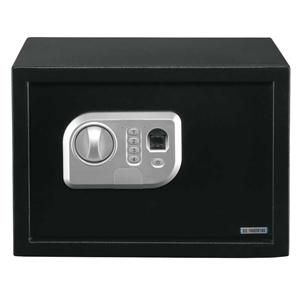
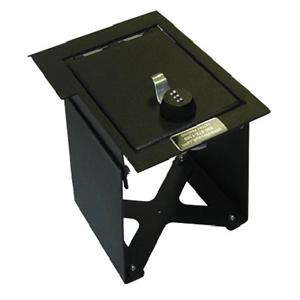
Smaller safes, usually referred to as “office safes” on our site, don’t get as much attention as the rock stars, but they are every bit as hardworking and important. In fact, office safes can do things standard safes can’t, such as:

1. Fitting into small spaces.
Sure, there are plenty of full-sized models that can squeeze into some pretty tight spaces, but if you want to have a safe under a desk or counter, or be able to use it as an end table, you’re going to have to go with an office safe. Unlike the big dogs, office safes can fit just about anywhere, and unlike full-size safes, it’s much easier to integrate an office safe into your existing décor.

2. Hiding out.
It kind of goes without saying, but if it’s small enough to fit into lots of places, it’s also small enough to hide. No safe is entirely theft-proof. Given enough time and tools, any one of them can be broken into. Office safes give you an added level of protection because you can hide them easily. Out of sight, out of mind. Thieves can’t steal what they can’t find!

3. Fitting into your budget.
It’s pretty obvious, but a safe half or less the size of conventional is going to cost you half or less as much. If storing long guns is not a priority, you can save a lot of cash going with a smaller model. We have SO many models, at SO many price points—from $60 to $6,000—so you’re sure to find something that works for you.

So, the long and “short” of it is, if you need a compact safe for home or office, check out our huge selection here. And remember, you can always contact us via live chat, e-mail, phone, or even Facebook and Twitter.

GunSafe Buyer’s Guide: What Size?

Right after cost, the most common concern for gun safe buyers is size.

What size gun safe do you need to store your weapons? What do the specifications mean?

It can be a little confusing when taking a first look at safes and numbers.

For example, one of our most popular models, the Liberty Fat Boy, states it is a 64-gun safe. This means that without using any of the shelving units for ammo or accessories, you can store up to 64 long guns. This depends, of course, on how bulky the rifles are, and if they have scopes or accessories.

Another popular model, the Browning M28F, states it is a 11 to 29 gun safe. This means you can store up to 11 long guns, and as many as 29 pistols.

The Cannon CO 54 safe states it can hold 48 guns. But take a look at the picture. As shown, the configuration will hold about 8 long guns and maybe a dozen pistols. In order to get optimal storage, you would have to remove all those great shelves.

This may work for some people, but we’ve found that once you have a gun safe, you want to store a lot more than just guns in it.

That’s why we always encourage people to buy bigger than they think they’ll need. Whether it’s your ever-growing gun collection, your important documents, or your one-of-a-kind collectibles, your gun safe will become a trusted place to keep things safe.

So when thinking about size, also think about the types of firearms you have, the additional accessories you’ll want to store, and whether you’re willing to give up shelf space for gun space. Then, always get the biggest safe you can afford. We’ve often found people wishing they bought a bigger safe, but never wishing they’d gone smaller.

Gun Safe Buyers Guide : Pros and Cons of Safe Locks

One of the biggest decisions you will make when purchasing a gun safe is whether to go with a standard dial lock or an electronic keypad.

Most of the major safe manufacturers now offer both options on their models, with the e-locks costing slightly more.

The choice of locking mechanism is mostly personal, as the security ratings of both types of lock are equal on the same model of safe.

It comes down to personal preference and what best suits your particular lifestyle. Most people seem to prefer the electronic lock for its convenience, while some stand by the unwavering reliability of the standard dial.

In an informal poll, 6 out of 16 responders preferred dial, while 10 preferred electronic.

Those who prefer manual locks like the old-fashioned looks and the fact that they are quiet. With a standard lock, the dial never shows serious signs of wear or reveals the combo as some keypads can. For the technologically challenged, a dial lock is preferable because there is no cooling off period after repeated failed entry attempts. Lock failure is nearly impossible with a dial lock, and there is less chance of manufacture defects. For those who are prepared for anything, there is the added security of knowing that electromagnetic pulses from solar flares or bombs will not cause a dial lock to malfunction. And for some, the option of closing the safe without necessarily having to lock it is an added bonus. There is no maintenance required with a mechanical lock, and the lifespan of even a modestly priced safe can be 100 years or more. Standard locks are also cheaper than electronic ones.

People who prefer electronic locks like the quicker access, and some mentioned that in certain states and localities, a safe is required by law. In these cases, keeping your home defense weapon in a quick-access safe is key. It’s easier to remember the combination on an electronic safe, and the grid pattern of the numbers means you can punch it in even in the dark. Keypads are also easier on older eyes that may have trouble seeing the tiny digits of a manual lock. E-safes secure as soon as you close the door, without requiring a spin of the dial-better for those who don’t want to remember that last step. It is also easy to change the combination on your safe without having to call a locksmith.

Manual locks have a few drawbacks, including slower access and the need for a lamp or flashlight if you’re accessing in the dark. You also can’t change the combo without a locksmith.

Drawbacks of the e-lock include that it makes noise, which can be a problem in some situations. Some safes have the option to turn this beep off. Keypads can also show wear on the buttons, which does not reveal the order of the code, but does show each of the numbers. And although it is very rare, and electronic keypad can experience failure due to flaws in manufacturing, or interference form an electromagnetic pulse. Repeated failed attempts to access the safe can result in a temporary lock-out for as long as half an hour-good in theft situations, but very inconvenient if it’s the homeowner who’s made the mistake. E-locks require maintenance, including annual battery changes if you don’t want the inconvenience of changing batteries at the time they die. Keypads also will not last as long as dials, simply because they are made of plastic and have more moving parts. They are also more expensive than dial locks, but the $50 to $100 difference doesn’t usually matter to people who are spending $1000 or more for a safe.

The following list should help you determine what features you can find in each type of safe:

Manual Dial Lock Electronic Keypad Lock
Speed
of access
Slower Faster
Ease of
access
Somewhat
difficult

  • More  digits
  • Must remember pattern/direction
  • Need light
Easiest

  • Less digits
  • Can access in dark (on some models)
  • Easier for “older” eyes
  • Grid pattern quicker than dial
Security Must
spin lock to secure
Secures
when door is closed
Changing
combo
Requires
locksmith
Can do
at home
Noise Silent Makes
noise (some can be muted)
Theft
issues
Few Slightly
more

  • Keypad can show wear pattern
Lock
Failure
Nearly
impossible, may come out of adjustment
Rare,
but possible

  • Manufacturer defect
  • Electromagnetic pulse
False
entry lockout
No After
three to four unsuccessful attempts, safe locks
Maintenance None, unless in need of adjustment Annual
battery changes
Lifespan 100
years or more
10-15+
years
Cost Cheaper Slightly
more expensive than dial

What’s the Best Gun Safe Dehumidifier?

Asking the best type of dehumidifier is kind of like asking the best model of hunting rifle. Everyone has their preferences, and everyone finds a certain style fits them best.

In the case of dehumidifiers, it’s good to start by choosing either a desiccant or electric type.

If you don’t have a lot of moisture problems, and if an electrical connection is not available or too difficult to access, then the desiccant option might be the right choice for you.

The Browning Sacc Dry Zone is a vented box of moisture-absorbing material, much like the little packets you find in foods or medicine, but on a much larger scale. This is also similar to the RV and closet packs you can find at retail stores, with one important exception—the Browning pack can be recharged in the oven. That means that should the pack ever absorb to its capacity, you can place it in a warm oven to dry and reactivate it. You can repeat this process indefinitely. No electricity, no fuss, no problem. The Dry Zone protects up to 37 cubic feet of space, about the volume of a standard 30-inch-wide safe. This product retails for $34.95

For an even more convenient desiccant solution, try the Eva-Dry E-333 dehumidifier. With this product, the desiccant crystals are enclosed in a plastic body, and recharging is achieved by plugging the unit into an outlet. Convenient color-changing bars indicate when the crystals are spent and in need of reactivation. The lifespan of this product is up to 10 years. The Eva-Dry is rated for 333 cubic feet, and is eco-friendly and non-toxic. Retail price $34.95

If you have more challenging moisture problems, or changes in temperature extremes that come from keeping your safe in a non-climate controlled area such as a shop or garage, think about investing in an electric dehumidifier. They are only a few dollars more than desiccant-type units, but provide more aggressive moisture control.

The Browning EverDry electric dehumidifier is an 18-inch-long bar that plugs into a standard outlet. Most safes have a hole in the back or side to allow for the cord, which detaches from the unit for installation. This unit should be used on safes 30 inches wide or larger to avoid touching the sides of the safe. The EverDry retails for $39.95

Another option in electric dehumidifiers is the Browning Flexible EverDry. This unit is flat and flexible, and can be bent around the corners and contents of your safe. Like the bar unit, the cord on the Flexible is removable to help with installation. This products retails for $49.95

Ultimately, the decision on the best gun safe dehumidifier is an individual choice, but these suggestions should give you some idea of what’s on the market. These models are available at http://www.gunsafes.com/store/Search.aspx?SearchTerms=dehumidifiers

Dial or Electronic Lock?

One of the most common questions we hear at the GunSafes.com office is “Should I get a manual dial or an electronic lock?”

The choice of lock is largely personal, and both options have their pros and cons.

The old-fashioned manual tumbler lock is typically less expensive than an electric lock. A dial will never wear out or need to be replaced, and it will not automatically lock you out from repeated failed efforts to access. We have also had people who prefer this option because it is virtually silent, a big plus if you find yourself in a dangerous situation where you need to access a firearm quickly and quietly.

Dial locks, however, are difficult to read in low light situations, and take a little more time to access than electronic locks. You not only have to remember the numbers of the combination, but also the pattern and direction to turn the dial. If you miss the mark, you have to start over. Dial locks also require you to spin the dial after closing the safe in order to ensure it locks. If you ever want to change your combination, you will have to contact the manufacturer or a locksmith.

Electronic locks are quick; just punch in the numbers and you’re in. You don’t have to do anything extra to lock the safe, just close it. They are much easier to access in dimly lit areas, even if they aren’t illuminated, because of the simple grid layout of the numbers on the keypad. Electronic locks are easier to change the combinations on, as they don’t require any special tools. Many electronic locks have an automatic lock out feature, so if someone tries three or four incorrect combinations, they will be locked out for 15 to 20 minutes. This can be a desirable or undesirable feature depending on your point of view.

However, electronic locks make noise (some of these have an option to turn off the “beep”). You also need to change your combination occasionally on an electronic lock, as the keypad will eventually show wear marks that reveal the numbers in your combination. Though a thief would still need to figure out the right order, this does make his job a little easier. E-locks can suffer electronic failure, though this is very rare. In case of an electromagnetic surge, such as a severe solar flare or nuclear explosion, an e-lock would not be able to function. They do require a battery change at least once a year, though this is external and quick to do.

As far as security, both locks are equally good. Neither is easy to bypass, and both are going to be inoperable after a major fire.

Ultimately, the buyer needs to weigh speed, convenience, and ease of access, and decide which option is right.

Did You Know?!

Did you know that you can refuse a package delivery? Many people don’t realize that when a shipping company shows up at their door with a damaged item, they do not have to accept delivery of it.

Although it seems like a tough product, gun safes do get damaged on occasion. At GunSafes.com, we ask that our customers inspect their safes upon delivery. Should a customer find damage, they should call us immediately, while the delivery company is still there.

In many cases the damage is minor, and we can offer you free touch-up paint or a small refund as long as you note the damages on the bill of lading before signing for the item.

In rare cases where the safe is considered non-salvageable, you should not only contact us, but also refuse the delivery. The company will remove the product, and we will ship a replacement as soon as possible.

Each company has their own preferences for how you handle damaged merchandise, so check with them when you place your order so you will know how to handle your next dinged or dented package and get a replacement in the easiest, quickest way possible.

Now you know!

Gun Safe Buyers Guide, part 5 : Gauge of Steel

One question we get asked quite frequently is “What gauge of steel should my gun safe have?”   This is a tough one to answer because some are looking for more protection than others.  In my opinion, a gun safe with less than 12 gauge steel is more of a “gun cabinet” than a gun safe.  12 gauge is a good starting point, but for something that is more resistant to torches, saws, and axes, I would look at 10 gauge or thicker.  For those looking for one of the thickest solid steel safes available, I would point them towards the Pendleton King Series gun safe.  Not only does it have a 1/4″ of solid steel throughout the safe, but it is also unique in that it has a circular design with a rotary gun rack for quick access to your guns and valuables.  Combine this was LED lighting, moisture management system, and a completely adjustable interior, and you have a top of the line safe.  Any thicker than that and you’re talking about bank type safes and vaults.  In fact, Pendleton Safes are made in the same factory that produces many of our countries bank vaults.  That means that they’re MADE IN THE USA! 

When you start explaining the steel thickness in inches and not by gauge, you’re talking about some pretty thick metal.  Pendleton Safes offer a minimum of 3/16″ solid steel on their gun safes.  That’s equivalent to a 7 gauge steel.  You’ll also find this thickness of steel in Browning’s Platinum Plus gun safes. 

Another thing to keep in mind when buying a gun safe is how the body and doors are measured.  If a manufacturer is claiming a 1″ door, is that a solid 1″ piece of steel?  Probably not.  In most cases it is a thin layer of steel, then fire insulation, and then another piece of steel.  These composite doors can mislead some people, so keep that in mind and feel free to ask questions.  To many smash and dash burglars, just the site of a steel gun safe is enough to keep them from even trying to break in.  It’s the more sophisticated burglars that are going to have the tools and time to break into a safe.  In many cases though, a 10 or 12 gauge steel safe may be all you need for your particular situation.

Below is a guide to show you the thickness (in inches) for a certain gauge of steel.

Gauge  /  Inches 

16           0.0625

15           0.0703

14           0.0781

13           0.0938

12           0.1094

11           0.1250

10           0.1406

9              0.1563

8              0.1719

7              0.1875

6              0.2031

5              0.2188

4              0.2344

3              0.2500

2              0.2656

1              0.2813 

Gun Safe Buyers Guide, Part 4 : WHAT IS A DEHUMIDIFIER?

If you’ve been roaming the net for information about gun safes, your research has likely pointed you towards a lot of sites mentioning dehumidifiers. It might sound out of place when you’re talking about a gun safe, but in fact it’s very important.  In this section of the gun safe buyers guide, we’ll talk about dehumidifiers;  what they are and how to pick one out.

Gun Safe Dehumidifier

What does a dehumidifier do?

A: The purpose of a dehumidifier is to eliminate condensation from forming inside the gun safe.  Condensation can cause metal to rust and can leave your safe with a nasty smell.  Depending on where your safe is located and what your climate is like, condensation can form inside a safe due to the change in temperature or in areas of high humidity. 

What are the different types of dehumidifiers? 

A:  There are two main types of dehumidifiers for gun safes.  An electric and a desiccant.  The desiccant dehumidifier works great in safes that are not near an electrical outlet.  Desiccant is a hygroscopic substance that has the ability to attract water molecules from the surrounding environment through absorption.  The desiccant needs to be recharged after it’s absorbed all that it can.  This is usually a period of 2-6 months, depending on the brand and how much it’s being used.  The desiccant can be recharged in your oven so it can be used over and over.

The electric dehumidifier is the more popular of the two.  This dehumidifier, also known as a “Golden Rod”,  heats to a surface temperature of about 140 degrees.  Its purpose is to maintain a constant temperature throughout your safe. Maintaining a warm temperature in the safe lessens the chance that water vapor will condense and promote rust.  It usually comes in the form of an 18″ rod that can be mounted to the floor or wall of your safe.  Installation is easy: The cord is removable so you can wire it through your safe and plug it in.  To take up even less space, there is a flexible dehumidifier as well.  This one can be bent to contour the corner of your safe.

Do I need a dehumidifier?

A:  This is a tricky question.  If the safe is going to be located in a climate controlled area like your home, it may not need a dehumidifier.  If the door is opened often enough, this will also help prevent condensation.  However, in some areas of high humidity, even a safe that is placed inside a home can collect condensation.  It might be best to call a GunSafes.com rep to speak about your particular situation.

If the safe is going to be placed in your garage, basement, or any area that does not have a controlled climate, I would recommend a dehumidifier.  The temperature change in these areas can cause condensation in the safe which will result in rust forming on your precious guns!

Which dehumidifier is right for me?

A:  First you’ll need to choose between electric and desiccant.  If you have the electrical outlet available, I would go that route.  Make sure the safe you are buying or the safe you own has a hole in the back to pass the cord through.  If not, you’ll want the desiccant.  Some people even feel the need to combine the strength of the electric with the dependability of the cordless desiccant.  That way if they are away on a trip and the power goes out, they know that their precious items will be protected.  Some people even double up and get two dehumidifiers if they live in an area of extremely high humidity.  It’s all about your individual situation.

For advice on your particular situation, leave a comment here or speak to a GunSafes.com rep at 800-540-1695 ext 401

Gun Safe Buyers Guide

We just launched a new section of our website called the Gun Safe Buyers Guide. This is a great place to do some research before your next gun safe purchase.  You’ll find a Q&A section with great answers to some of the most frequently asked questions.  Whether you have a question about a lock type, a fire rating, or you’resimply looking for a glossary of terms, this is a section of GunSafesBlogger.com that you have to check out.  As always, feel free to post a comment or ask a question.  You can find the gun safe buyers guide link located in the yellow bar at the top of this page.

Gun Safe Buyers Guide, Part 3 : DELIVERY & INSTALLATION

In this section of the gun safe buyers guide, I’ll focus on the delivery and installation for gun safes.

Q: How are gun safes typically shipped?

A:  Due to their weight, gun safes are shipped via a truck freight carrier.  This is typically a semi-truck (18 wheeler), but it can sometimes come on a smaller box truck (UPS type truck).  The safes are packaged with corner protectors and cardboard and they are bolted down to a wood pallet so the driver can easily move the safe with a pallet jack.  Most curbside deliveries that are over 150 lbs come with a liftgate.  A liftgate is a mechanical lift on the back of the truck that lowers the safe down to the ground level.  If a safe is shipped “curbside”, that means it is left at the curb.  On occasion, if the truck is able to do so, they will lower the safe on the driveway a little closer to the home.  This depends a lot on the driver, the truck, and the slope of the driveway.  Sometimes a large semi-truck just cannot back down a particular driveway.  In that case it will be left at the curb.   

Q: How do you move a gun safe into your home?

 A:  There are several methods and I think I’ve heard just about all of them.  I’ll start with the easiest:  Hiring a company to move it in for you.  This service is called “White Glove” and there are usually several levels of service available.  The first level (Bronze) is where the delivery company will wheel the safe into your garage for you.  They drop it off inside your garage which is ideal if that’s where you plan to keep it.  Keep in mind, the pallet will still be attached to the bottom of the safe.  The next level of service (Gold) involves the company bringing the safe inside your home into a room of your choice.  They will also remove the pallet that is bolted to the bottom of the safe.  If the safe is under 900 lbs they can also move the safe up or down two flights of stairs.  Once the gun safe is in place, the movers will take away all the packing debris and leave the it ready to use.  If the delivery is out-of-the-ordinary or requires a lot of assembly time, a Platinum white glove service is also available. 

The next method of delivery is for the “Do-It-Yourself-er”.  By arranging some helpers or friends to move it from the curb into your home, you’ll avoid paying any additional delivery fees.  I’ve heard all kinds of stories about rolling a safe on ping-pong balls or other various methods, but the most popular is to use a pallet jack or furniture dolly.  The pallet jack is a great tool because the safe is already attached to a pallet so the jack easily rolls right under.  The hydraulic lift on the pallet jack can make the move from the curb to your threshold very easy.  Once it’s at your front door (the threshold), you’ll probably want a crew of 3-4 people there to help lift it inside.  A furniture dolly would be helpful here as well. 

A new product that I’m really impressed with is the Shoulder Dolly.  This simple piece of equipment makes it easier and safer to lift heavy objects.  It doesn’t give you “superpowers”, but it can make large and awkward items easier to handle so you can use all your strength without losing your grip.  Keep in mind the weight limit is 800 lbs and you’ll need two capable lifters to move a heavy safe.  The nice thing about this product is that a one-time purchase can be used over and over for several different objects.  I highly recommend using the ShoulderDolly not only for gun safes, but for all your furniture or appliance moving needs.   

Shoulder Dolly

Q: Can a safe be mounted to the floor?

 A:  Most of the time, yes!  In fact most manufacturers pre-drill the mounting holes and recommend that you bolt the safe into the floor.  Sometimes the mounting hardware is included as well.  If not, the bolts can be picked up at your local hardware store.  Even if you are mounting the safe in the garage or basement and you have a concrete floor there are lag bolts that you can use.  The advantage to mounting your safe is that it won’t tip over and it adds another level of security by making it harder for someone to break-in.  The best way to pry into a safe is by tipping it on its side, so eliminating that method of entry is ideal. 

Q: What do I need to know about the delivery before ordering a safe?

A:  First of all, you’ll want to take good measurements of all the doors that the safe will be going through.  Compare those measurements to the dimensions of the safe.  The most important specification of the safe is probably the depth because a safe can be tipped on it’s side which makes the depth the widest measurement when going through a door.  You also want to check if the specification given includes the handle and hinge.  Most of the time the safe is shipped with the handle inside the safe to keep it from getting damaged, but you’ll still want to account for the hinge that protrudes from the safe body. 

You’ll also want to plan the best route for the safe to go through your home to its final destination.  Is it easier to go through the front door, around the back, or through the garage?  Make sure to mention at the time of the order if you have a steep or gravel driveway, a section of grass to roll over, a fence, or any other obstacles.  This way the delivery company will make sure to bring the appropriate equipment the first time.  It’s also a good idea to think of a possible “backup plan” in case they’re not able to get the safe where you wish.  If the safe won’t fit or is too hard to maneuver into the location you choose, give them a secondary location to put the safe.

Q: I live in a rural area or have a long or unusual driveway.  What are my options?

A:  These deliveries are determined on a case-by-case basis depending on several factors.  It would be best to contact a gun safe account rep to talk to them about your particular situation before ordering the safe.  They can determine the best way to get the safe delivered.  If it’s not suitable for a truck to drive down your driveway, you may need to pick it up at the end of the driveway or at a delivery terminal in your city.  You can reach a GunSafes.com rep to talk about the different options at 800-540-1695 ext 401.

Gun Safe Buyers Guide, Part 2 : FIRE RATINGS

More Q&A with the Gun-Safe-Guru.  This part of the gun safe buyers guide will focus specifically on the fire ratings for gun safes.

Q: Can you explain a gun safe fire rating?

A:  The fire rating is the amount of time a safe can endure a certain temperature while keeping the internal temperature below 350 degrees.  Paper begins to char at a temperature of just 400° F.  For this reason, most manufacturers choose 350° as the maximum internal temperature the contents of a safe can reach for the period of time that they specify for each safe.  During testing, safes are heated to a given temperature, usually between 1200° F - 1400° F, for up to four hours then cooled naturally. In order to pass the fire test, the safe’s contents must at no time during the test go above 350° F. This ensures that important paper documents will not be destroyed by the intense heat of a fire.  Some home and office safes are made specifically to hold media (cd’s, data drives, etc) and so their internal temperature must remain below 125° F because media tends to melt at a much lower temperature.  If you’re planning on storing any kind of media in your gun safe, we recommend putting a separate media safe inside your gun safe. 

Q: What amount of fire protection do I need?

A:  There are many factors that you should consider when choosing a fire rated safe.  Most safes fire ratings start at 30 minutes and as more fire insulation is added, the amount of time a safe can withstand a certain temperature is increased.  Consumer gun safe fire ratings top out at about 2.5 hours.  When deciding how much fire protection you need, ask yourself a few of these common questions:  

  • How far away is my home from a fire department?
  • Am I putting this safe inside the home or in a basement?
  • Do I have a lot of trees, brush, and other natural fuels near my home?
  • Am I in an area of high fire danger?
  • Can insurance replace the items that are in my safe or are they irreplaceable? 

There are many sources of information for this subject on the Internet, but most of what I’ve found points out that the average house fire burns for 27 minutes at 1100° F.   If your particular situation puts you in a better or worse scenario than the “average”, you’re going to want to pick a fire rating based on that information. 

Q: Why do safe manufacturers perform different fire tests?

A:  Unlike the fuel standards we have at gas stations or the electric ratings we have on appliances, there is no governing body when it comes to fire ratings on safes.  Because of this, many safe manufacturers can make bogus claims, but if you ask the tough questions and do your research you can usually sniff out a phony safe.  Some good questions to ask when researching a fire safe:

  • What is being used as the fire insulation?  Fireboard or composite material?
  • How many layers of fire insulation and on how many sides?
  • What is the warranty and does it cover fire damage?
  • Does the safe manufacturer have any BBB complaints? 

Q: What is a Palusol door seal?

A:  A Palusol door seal is a brand of intumescent door seal that is used to prevent smoke and heat from getting inside the safe.  Some manufacturers use Palusol, others use a generic brand, but they all work using the same concept.  When the seal is heated up from a nearby fire, the intumescent seal expands and seals the safe door shut.  This can also keep some water out, but it doesn’t make the safe waterproof

Gun Safe Buyers Guide, Part 1 : LOCKS

Time for a little Q & A with the Gun-Safe-Guru.  We’ll break up this gun safe buyers guide into several parts.  Feel free to post questions at the bottom of this article or email me:  josh(at)gunsafesblogger.com

Q: Should I choose an electronic lock or combination dial lock?

A:  This is a personal preference, but I will list the pros and cons for both the electronic lock and the manual dial lock.  Most safe companies offer a choice of a dial or e-lock, but a few manufacturers like Winchester and Mesa only offer the safe with an electronic lock.  As far as security is concerned, often times both the electronic lock and combination lock carry the same Group II or Group I security rating. 

Pros for the electronic lock:  Quick and easy access.  Change the combination at any time.  Easier to see under dim light. Door automatically locks when it is closed

Cons:  Possibility of electronic failure (although very rare).  Having to change the batteries (at least once a year).  Shorter life span (typically 10-15 years)

Pros for the combination lock:  No electronic parts, no batteries to replace.  More durable & longer lasting

Cons:  Turning the dial back and forth can be time consuming, especially if don’t land exactly on the right numbers.  Harder to see the numbers under dim light.  Door doesn’t automatically lock when closed, you need to spin the dial.  Be sure to spin the dial every time you close your safe door!

One thing to keep in mind about the e-lock:  Be sure to change your combination every once in a while otherwise the keypad will wear down, showing the numbers that you use most. 

Q: If I buy a safe with an electronic lock and the battery dies, how do I get into the safe?

A:  You don’t need to get into the safe to change the battery.  Simply replace the battery located inside the keypad and your safe will be ready to open.  Most electronic locks feature a low battery alert that will notify you that the battery needs to be changed so you can avoid this problem all together. 

Q:  Can I determine the combination on a manual dial lock? 

A:  The combination dial locks come with a predetermined code from the factory.  In some instances the combination can be changed, but that will need to be done by a certified locksmith.  This can be one advantage to choosing an electronic lock.

Q:  Can you explain the “lockout” feature on electronic locks?

A:   Most quality electronic locks have an automatic lock-out feature.  This feature disables the lock for a period of time (usually 15 to 20 minutes) if someone enters three or four incorrect combinations consecutively.  This safeguard keeps thiefs from trying several different combinations in a short period of time.

Q:  Do any of these full size gun safes have a key backup?

A:  Surprisingly enough, most full size gun safes do NOT have a key backup.  There are a few exceptions.  Rather than list them all here, just give me a call at 800-540-1695 ext 208 or email me:   josh (at) gunsafesblogger.com